Share Gisela Johanna Slade's obituary with others.
Invite friends and family to read the obituary and add memories.
Stay updated
We'll notify you when service details or new memories are added.
You're now following this obituary
We'll email you when there are updates.
Select your format and elements to print

IN LOVING MEMORY OF Gisela Johanna Slade
Gisela Johanna
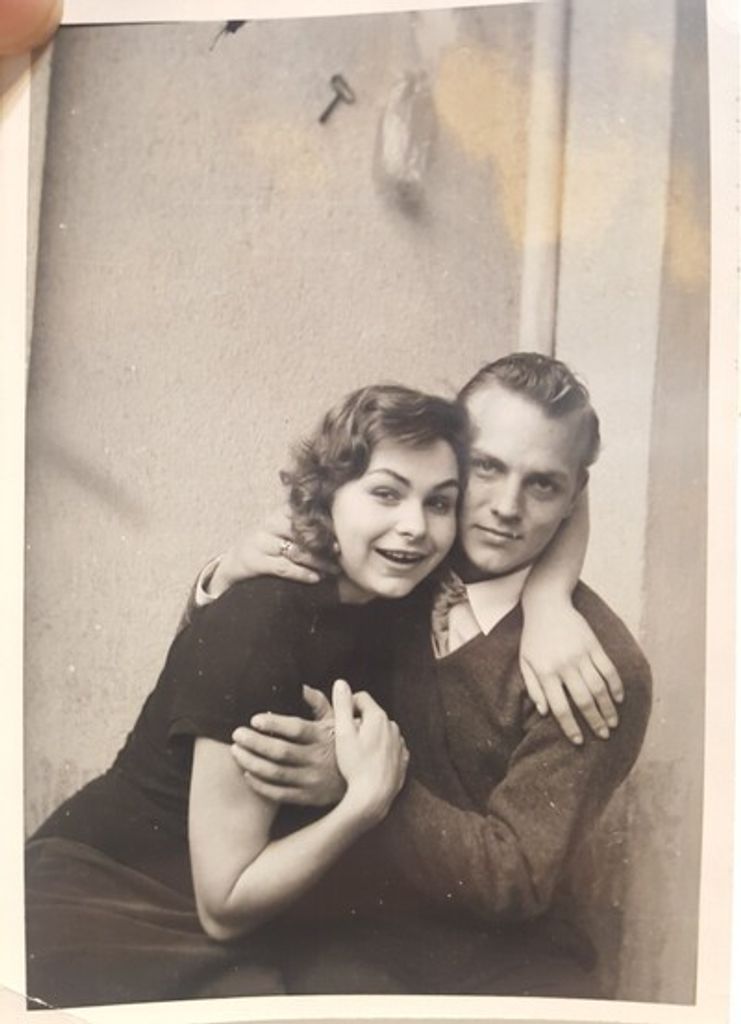
Slade
Jun 23, 1935 — Nov 12, 2020
Gisela Johanna Slade's Obituary
Gisela Johanna Slade, née von Komorowski, age 85, known to most as "Oma" or Tante Giese, left us Thursday morning, November 12, 2020, at her home in Hanover, Illinois.
She was born June 23, 1935, in Berlin, Germany, a daughter of the late Leo Stephan and Johanna Charlotte von Komorowski.
Gisela was preceded in death by her husband of 48 years and love of her life for more than 60, Raymond Roy Slade, who she waited patiently to see again for the last 14 years.
Gisela is survived by her son Roy, daughter Sandy, and son and daughter-in-law James and Kai of Hanover; grandchildren Jackie (Arley), Brandon, and Tara; great grandchildren Dylan, Matthew, Carson, Vivienne, Victoria, and soon-to-be great, great grandbaby; her sister Ursula "Ulla" and Regina (John); nieces and nephews Robert (Bernadett), Pat, Deborah (Randy), Irene (Troy), Caroline, Steven, Diane, and Johnny; lots of great nieces and nephews; and so many other family members and friends who will carry her memory.
Growing up in 1940's Berlin, Oma came to know war and tyranny as a girl. It was important to her that she share these stories with her grandchildren. For defying SS orders, her mother had to live on the run with her first two daughters. On the streets, Oma witnessed regular violence and death, and endured the horrors of war herself. Our great grandmother "Big Oma" and her daughters knew their fortune in surviving to resume a normal life.
Oma went on to study nursing, do much dancing, and tend bar at a bustling tavern in Berlin where she met our opa, a poor boy from Vermont whose German, she said, was so good that she believed him to be Norwegian. He pursued her relentlessly until she finally married him on June 24, 1958. Knowing very little English, Oma left her life in Berlin to build a family with her one true love, living on military bases around the world and U.S., moving frequently, often raising three kids on her own, and occasionally chain-smoking at notice that her husband was near death on a ship somewhere. When Opa received orders to leave, Oma would call her sister and best friend Ulla, pack up the kids, and go to wherever she was. They stuck together like this until the very end, known to many as "the German sisters," bickering and brunching, and sometimes cleverly evading speeding tickets. Oma never shook her longing for home, but still, she grew exceptionally fond of Ranch Dressing, and followed her children and grandchildren to rural Illinois where her life continued to revolve around us completely.
Our Oma, our Giese, our "Giela," the keeper of the snacks, maker of the baths, generous purveyor of the Nivea. Home was with her, wherever she was, and the same went for many of our friends. She kept us safe, she carried a wet wash cloth in a ziploc bag for sticky hands and faces, she put food in our bellies, she tucked us in at night. There were Disney movies, fresh pajamas, and no raised voices or adults stressed about adult things. There was a tire swing in the backyard, Legos, Barbies, and a tool shop in the basement where, for some reason, we were allowed to putz around and execute poorly thought-out creations. She came to bed late, and she was up first. Oma was a pioneer of really great garage sales, the ones with Gameboys and Smurfs and Cabbage Patch dolls. She always "surprised" us with the Chinese buffet on our grocery store adventures, and never didn't call it the wrong name. Oma, a storyteller, a kitchen dweller, a woman of true candor and astoundingly even temparement, intimidated by no one and willing to give most a chance. She did not cower in the face of those who opted for margarine over real -- unsalted -- butter, she was unapologetic in buttering her Polish Rye to the very edges, sometimes topped with tomatoes and pepper, cottage cheese and chives, liverwurst, or blood tongue, sometimes just a Stulle "for your nerves," she made our hot cocoa with milk, and took it upon herself to compensate for any visit to a friend whose parents found skim milk suitable for consumption, and didn't try all that hard to conceal her dismay. When we were six, sixteen, twenty-five years old, we came to her in the middle of the night, we called from another city, we cried at her table, we climbed into her lap, we slept in her bed, she listened and she held us and she saw that we were good, even when we hadn't learned our lesson. We made mistakes, and she shared her own. If someone hurt us, she stood up for us, she protected us, even if it meant scolding an inebriated and fully-grown man at two in the morning. She loved reading about ancient civilizations, learning about the Mayans and the wonders of Egypt. Oma cherished elephants, and if we brought her one for her cabinet of tchotckes, the trunk had to be up -- for good luck. She found comfort in moons and stars and wolves. We watched Riverdance on VHS more times than anyone should. She finally saw them live a few years ago with her son James. At Christmas time, Oma played Trans-Siberian Orchestra, and even though she rolled her eyes, she reveled in, and was clearly corrupted by, the anecdotes of her kids and their metal music and how she discovered their Marijuana plants in her tomato garden. She enjoyed Bingo and slot machines and being out and about with Opa and Tante Ulla. When she encountered a little luck or accrued points on her Diamond Jo card, she treated us grandkids to dinner. She cleaned homes for years, befriending those she served, taking them by surprise with her wit and unabashed bemusement at the shabbiest aspects of American culture, like themed living rooms and wearing pajamas in public. Her big outings were lunch and shopping at Kohl's for fresh socks, new backpacks, the right fitting jeans, and nice school clothes for her grandkids, and, for the rest of the family, a new set of sheets, good pillows, comforters, flannels, a blender on sale, whatever she inexplicably knew someone could use but wouldn't buy for themselves. She did everyone's laundry, she treated the stains, she matched every sock, she folded the undies. Over coffee -- or a glass of actual buttermilk -- and looking at old photo albums, Oma frequently reminisced and expressed her preference for the European way of caring for the aging, accessible healthcare, a recognized dignity and reasonable pay for crucial occupations, like factory workers and trash collectors, and, most importantly, her strong endorsement of the pay-a-quarter-and-get-it-back-when-you-return-your-grocery-cart-to-the-proper-location system at Aldi. With Oma, we played Yahtzee and ate buttered noodles. We talked war, sex, religion, and how badly we needed an iPod Nano or new Yugio cards. Oma didn't text or have a smart phone, she didn't have an email, and never used the Internet. She didn't own a home or drive a car. She lived on very little, but she got us our first flip phone, our first Cheap Trick ring tone, our first 2006 garage sale desktop computer, she replaced cars and co-signed on loans, and no one left her front door without reprimand for wet hair or not wearing socks, nor without snacks and gas money. Everyone received their 25-Day-Countdown-to-Christmas Calendar of not-that-great German chocolates each year, just like they will next month, because she somehow managed to have a dozen chocolate Christmas calendars stored away in her closet before she knew she'd be gone. Sometimes we saw things differently, but it wasn't all that difficult because she was someone who was interested in conversation, absent of ego and resentment. It's been exciting to challenge and to be challenged by her, to learn from each other. Oma, the provider of provisions, our reminder to breathe, she saw us, she understood, and when she didn't, she loved us anyway. She asked, "Now, what will stressing over it solve?" and made us a sandwich, she told us how, after a night of lying very, very still amidst dead bodies, as to appear dead, her mother said, "Look, it's the sun. Let's be happy to see another day." Her labors of love, her quiet service to us day after day, decade upon decade, her complete and unwavering devotion; she did it thanklessly, tirelessly, as if getting us through was all that mattered, as if she didn't have chores of her own, bills to pay, as if her own grief, her pain, her hobbies and delights didn't exist. She did not scoff at how we often took all she gave for granted. She didn't grow bitter at the lack of acknowledgment that we relied on her to keep us steady, to make us laugh when things got heavy, how she never let us take ourselves too seriously, how she made us believe we had any reason to hold our head high and keep trying to be better. She didn't preach, she did not pander, she held her family accountable, she was honest, she was real, and, still, her love and support had no bottom. She tended to our every need like her life depended on it, she healed our wounds, she mended our broken hearts. She never didn't make everything ok. There was nothing that couldn't end with a mug of warm milk and amusement at our own melodrama. It's been the greatest privilege and joy to learn from such a woman, to receive her love. We are stronger because she let us unravel. We are better for knowing her.
There will be no service at this time due to the COVID-19 pandemic.
For all who will miss her: Oma always said, "It'll all come out in the wash."
Gisela Johanna Slade's Guestbook
Visits: 1
This site is protected by reCAPTCHA and the
Google Privacy Policy and Terms of Service apply.
Service map data © OpenStreetMap contributors